L-Citrulline And Circulation: The Nitric Oxide Connection
L-Citrulline is an amino acid that the body converts into L-arginine, which in turn is a building block for nitric oxide — a molecule that helps blood vessels relax.
This two-step conversion process is why L-citrulline has become a common ingredient in circulation-focused supplements, with a reasonably solid research base behind it.
Why not just take L-arginine directly?
L-arginine is the more direct precursor to nitric oxide, but oral L-arginine supplements are broken down substantially by the gut and liver before reaching circulation. L-citrulline takes an indirect route through the kidneys that generally results in higher blood arginine levels than an equivalent oral dose of arginine itself — which is the main reason supplement formulas increasingly favor citrulline.
What the research generally measures
Human studies on L-citrulline have looked at blood pressure, exercise tolerance, and markers of vascular function, typically over trial periods of several weeks. Research is indexed on PubMed.
Being honest about the size of the effect
What the evidence does not support
L-citrulline is not a treatment for diagnosed high blood pressure, heart disease, or erectile dysfunction related to a medical condition. Effects on blood flow are generally modest and build with consistent use rather than appearing as a single-dose event.
Applying this to Cardio C2
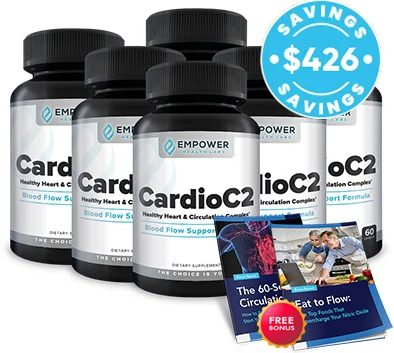
L-Citrulline is included in Cardio C2's formula specifically for the circulation-support angle, working through the nitric oxide pathway described above.